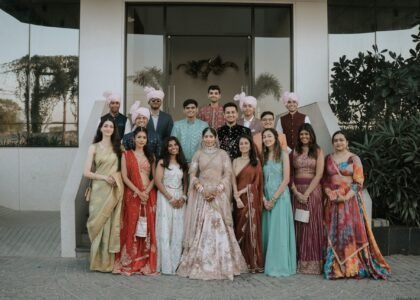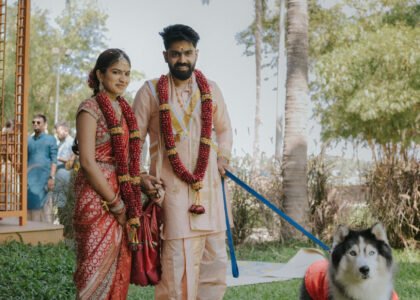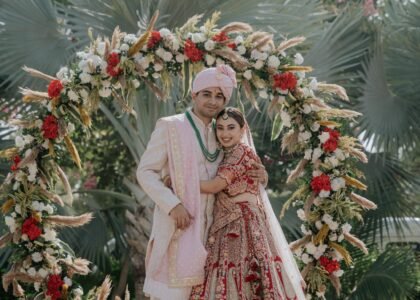
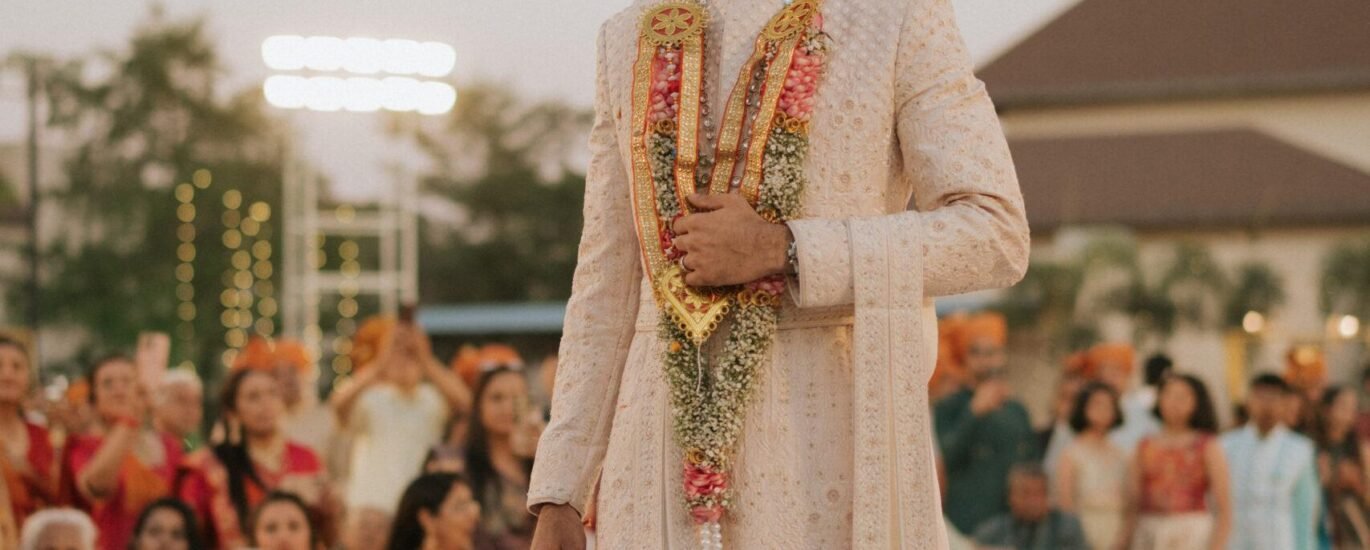
Groom portraits often get squeezed between tying the safa, answering family calls and leaving for the ceremony. By then, the room is crowded and someone is already asking for the car keys. A little planning gives these photographs their own space without turning the morning into a modelling session.
For groom portraits in Diu, start with a simple aim: a few clear photographs of you, the clothes you chose and the people helping you get ready. A useful portrait should feel recognisable when you look at it years later. You do not need an elaborate location or an unfamiliar pose to achieve that.
This guide offers planning suggestions. Timings, access and deliverables should be agreed with your photographer for your own wedding.
Give groom portraits a place in the wedding schedule
Put the portrait session in the shared schedule rather than leaving it as “if time permits”. Tell the photographer when you expect to be dressed, when the family needs you and when transport leaves. Include the time required for jewellery, shoes, safa or any ceremonial accessories.
A sample plan could reserve twenty minutes after dressing for individual portraits, followed by a separate window for close family. That is an example, not a universal requirement. Your outfit, the size of the family and the distance between rooms may call for a different arrangement.
Work backwards from departure
If the departure time cannot move, protect it. Finish the essential portraits near the getting-ready room before considering a second location. Travelling across the property for one background can cost more time than the photograph needs.
Choose one person to handle calls
Ask a trusted friend or sibling to answer routine logistics questions during the session. They can keep the family informed while you put your phone away. The photographer can then work through the brief without repeatedly restarting a pose.
Prepare the room before the camera arrives
A tidy corner is usually enough. Move luggage, shopping bags, plastic covers and breakfast trays away from the intended background. Keep the clothes and accessories you want photographed together so nobody has to search through several rooms.
Do not empty the room of its meaning. A parent helping with a cuff or a friend checking the safa can make a stronger photograph than a perfectly styled but impersonal scene. Keep the people who are genuinely involved, while giving them space to move.
Let the photographer assess the light. A window can help, but direct sunlight falling across half a face may need a different position. Avoid deciding the exact chair and camera angle before the photographer has seen the room.
Make a short groom portrait shot list
Share priorities, not dozens of copied poses. Choose photographs that show different things: expression, full outfit, details and relationships. A short list also makes it easier to decide what to drop if the day runs late.
| Photograph | What it records | Preparation |
|---|---|---|
| Close portrait | Face, expression and headwear | Finish grooming and check the collar |
| Full-length portrait | The complete wedding outfit | Wear the final footwear |
| Getting-ready detail | Cuff, buttons or accessories | Keep meaningful items together |
| Parent or sibling moment | The people helping you prepare | Let them know the time |
| Friends together | Companionship before the ceremony | Choose a small available group |
If an heirloom matters, explain why. A watch from your grandfather or a family accessory deserves a different kind of attention from a decorative item selected only for the shoot. The photographer cannot know that distinction unless you tell them.
Choose a location that fits the day
For a wedding in Diu, the most useful location may be the room, a shaded passage or a quiet part of the venue. A beach visit is optional. Add it only when travel, access, clothing and the ceremony schedule make it comfortable.
Check permission before using hotel interiors, terraces or private gardens. A wedding booking does not automatically mean that every part of the property is available for portraits. Ask the venue coordinator which areas can be used and whether other guests will be present.
Keep outdoor plans flexible
Coastal wind can affect a stole, safa and loose fabric. Have someone nearby to help adjust them between frames. If the weather or access is unsuitable, move to the agreed indoor option instead of forcing the original plan.
Prioritise clean clothes and easy movement
A location that risks staining your shoes or makes walking difficult is rarely worth adding just before the ceremony. Stay on suitable surfaces and avoid edges, water or elevated spots that make anyone uncomfortable.
Wear the outfit as you will wear it at the ceremony
Try the complete outfit before the wedding day. Sit down, stand up, walk and check how the jacket or sherwani settles. Confirm that the shoes are wearable and that fastenings, buttons and accessories are ready.
Small details become noticeable in close photographs. Remove packaging and stickers, check pockets for bulky objects and keep a clean cloth available for spectacles. None of this requires changing your appearance; it simply avoids distractions you did not intend.
If a stylist or family member is helping with the safa, coordinate their arrival with the photographer. Do not recreate a meaningful dressing moment solely because the photo team was told to arrive later. Plan coverage around the real sequence where possible.
Use simple actions when posing feels awkward
Start by standing comfortably and letting your shoulders settle. A photographer may ask you to adjust a cuff, look towards the window or walk a few steps. These actions can give your hands something natural to do.
Tell the photographer if you dislike a pose or have a movement limitation. A portrait should not require discomfort. Sitting, leaning lightly against a suitable surface or staying near familiar people may work better than a formal stance.
A few direct-to-camera photographs are useful, especially for family albums. They can sit alongside quieter frames where you are looking away or interacting with someone. There is no need to maintain the same serious expression throughout the session.
Include family without creating a second ceremony
Decide which relationships belong in this short window. Parents, siblings or one close friend may be enough. Larger combinations can be handled in the main family photograph session, when everyone is dressed and available.
Ask before photographing private or emotional moments. Some families welcome a camera while a parent offers a blessing; others prefer that moment to remain personal. Make the preference clear before the day becomes busy.
Explore the site’s existing wedding photography timeline to connect portraits with the wider schedule.
Discuss editing and delivery before booking
Ask whether individual groom portraits are included in the agreed coverage and how the team will divide time if both partners are getting ready in different places. One photographer cannot photograph simultaneous moments in separate locations.
Clarify the number of finished images, selection process and delivery timeline. Discuss retouching in plain language: temporary marks, fabric adjustments and major changes to appearance are different requests. Do not assume all editing styles are included.
Also agree on portfolio use and any privacy preferences. If a room contains personal documents or contact information, put them away before photography starts. Your wedding photographs do not need to reveal unrelated private details.
Keep a small preparation kit nearby
Ask one person to keep a comb, tissues, drinking water and any outfit fastenings together. Include only products you already use comfortably. Trying a new grooming product on the wedding morning can create an avoidable distraction when there is little time to make changes.
Give the photographer a quick update if something important is running late. For example, if your footwear is still in another room, begin with seated or close portraits while someone brings it over. A flexible sequence protects the useful photographs without requiring you to appear fully ready before you are.
Once the priority images are finished, stop and return to the wedding. The session has done its job when you have a small, varied record of this part of the day.
Frequently asked questions
Do groom portraits need a separate outdoor shoot?
No. A suitable room or nearby venue corner can provide a complete set. An outdoor session makes sense when it adds something meaningful and fits the schedule comfortably.
What if I am ready later than planned?
Tell the photographer promptly. Keep the close portrait and full outfit photograph as priorities, then move optional groups or extra locations to another agreed window if possible.
How do I enquire about groom portraits in Diu?
Share the date, venue, dressing location and ceremony departure time with Memories by TK Solanki’s wedding photography service. Mention the people and personal details you want included. The studio background can help you understand the business; confirm current coverage and availability directly.