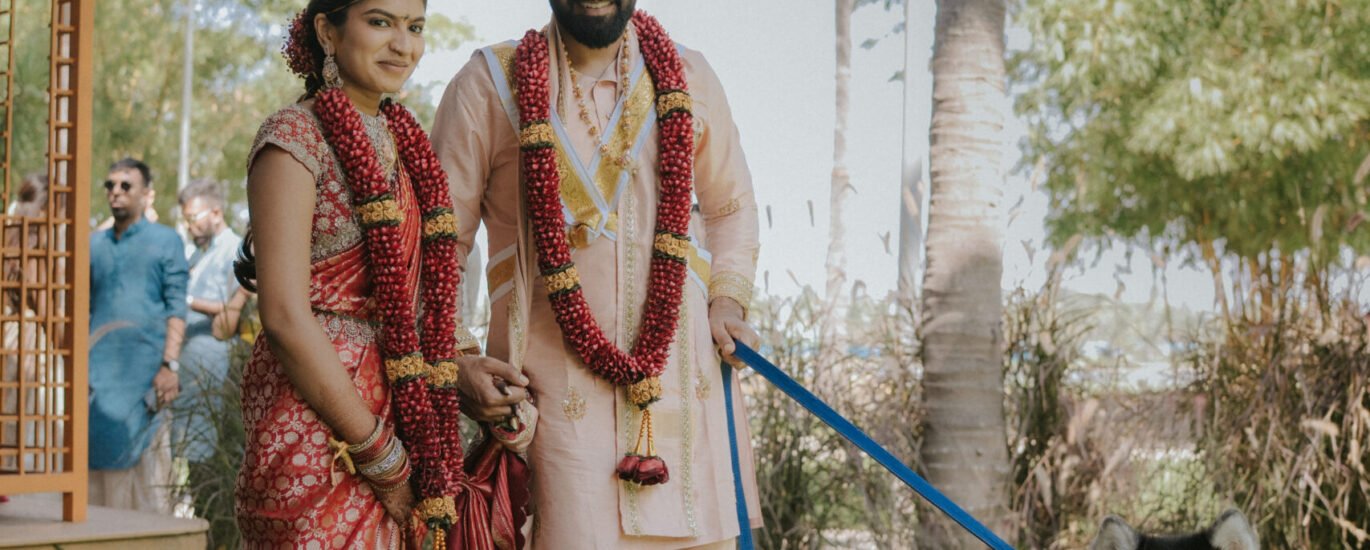
If your dog is part of everyday family life, it is natural to want a photograph together on the wedding day. The useful question is how to make that brief moment fit comfortably into the event. Wedding photos with your dog should begin with the animal’s needs and the actual venue arrangements, not a complicated pose.
For a wedding in Diu, ask about permission, supervision and the route between the dog’s waiting place and the portrait area. A simple photograph near the venue may be easier to arrange than a long appearance during the ceremony.
This is a photography planning guide, not veterinary or individual behaviour advice. Discuss any health or behaviour concerns with an appropriate professional who knows your dog.
Decide whether the wedding setting suits your dog
Your dog’s normal response to people, noise and unfamiliar places should shape the plan. A portrait can be optional even when it matters a great deal to you. If the setting is unsuitable, a separate quiet session can still produce a meaningful family photograph.
Dogs Trust’s dog-friendly wedding guidance recommends planning from the dog’s perspective, involving familiar carers and allowing quiet breaks. It also recognises that some dogs may be more comfortable staying away from the wedding. Use that welfare guidance alongside your own professional advice where needed.
Choose a small photographic aim
One clear family portrait and a few natural interactions can be enough. Avoid making the whole wedding programme depend on the dog completing a particular action. A flexible brief gives the photographer something achievable to work towards.
Keep a separate-session option
Ask whether a portrait before the wedding or on another suitable day is possible within a separately agreed service. That option can remove the pressure of formal clothes, guest arrivals and ceremony timings without making the dog less part of your story.
Confirm the venue’s actual permission
Ask the venue directly whether your dog may enter the areas needed for the session. Permission for accommodation, outdoor grounds and an event space may differ. Do not assume that a property described as pet-friendly allows access everywhere.
Explain the proposed route, approximate portrait window and who will supervise the dog. Ask about any venue conditions and record the agreed arrangement. The photographer should receive this information rather than discovering restrictions at the entrance.
Also confirm where the dog will wait before and after the photographs. A portrait location is only one part of the plan; arrival, supervision and departure need an equally clear arrangement.
Assign a handler who is not in the main wedding schedule
Choose a familiar, responsible adult who can focus on the dog. That person should not also be expected to lead the ceremony, coordinate every vendor or appear in all the family groups. Give them the photographer’s contact and the agreed timings.
The couple may be busy with clothing, guests and rituals. The handler should be able to bring the dog to the session and leave with them afterwards. Make the handover clear so responsibility does not drift between relatives.
| Task | Who should confirm it | Useful detail |
|---|---|---|
| Venue access | Couple and venue manager | Approved areas and conditions |
| Supervision | Named familiar handler | Responsibility before and after portraits |
| Portrait timing | Photographer and coordinator | A short window with an alternative |
| Clothing assistance | Trusted family helper | Someone to manage delicate fabric |
| Departure | Handler and transport contact | A clear end to the dog’s involvement |
Keep the plan simple enough that the handler can explain it quickly. If nobody can take responsibility throughout the agreed period, reconsider involving the dog on the wedding day.
Choose a photograph location with easy access
Look for a permitted area close to the dog’s waiting place and suitable for the couple’s clothing. Avoid a route that requires several unnecessary transfers. Ask the photographer to assess the background and available space.
The most dramatic setting is not always the most workable one. A quiet patch of approved grounds may allow a clearer family portrait than a crowded entrance. Keep the session away from active service routes and areas needed by other guests.
Make the camera position work around the group
Let the photographer adjust the framing instead of repeatedly moving the dog into a precise spot. A wider composition can include the relationship without requiring everyone to hold an exact position.
Keep control arrangements visible if needed
A lead or a handler’s hand does not make the photograph a failure. Do not remove safe control solely because a reference image hides it. Discuss any desired cosmetic editing separately without changing the on-set plan.
Try ordinary interactions before formal poses
Start with something familiar: standing together, looking towards the dog or sharing a quiet moment with the handler nearby. The photograph can show your connection without all three subjects looking directly at the lens.
Tell the photographer which interactions are normal for your dog and which are not. Avoid asking for unfamiliar tricks, balancing or staged actions simply because they appear in an inspiration board.
If the dog moves, the photographer may make a different kind of frame. Keep the aim broad enough to accept a natural interaction. Repeatedly restarting the same pose can use the whole window without adding a better image.
Keep wedding clothes and accessories practical
Discuss long hems, delicate embroidery and anything that could become caught during the portrait. A helper can manage fabric while the handler remains responsible for the dog. The couple should not have to solve both jobs at once.
Any accessory for the dog should be familiar and appropriate to their needs, with the handler able to remove it promptly. Do not make a costume a condition of including the dog in the photograph. Your relationship is the subject, not the accessory.
Keep valuable rings and other small ceremonial items with their usual responsible person. A symbolic photograph does not require transferring real valuables to the dog or creating an unplanned task during the ceremony.
Tell guests how to support the short session
A small audience is easier to coordinate than a circle of people calling for attention. Ask one helper to keep the portrait area clear. Let the handler and photographer guide the session without several guests trying different instructions.
Explain any boundaries to children and other guests before the session. Do not assume that everyone is comfortable around dogs or that the dog wants interaction with everyone present. Keep the plan considerate of both.
If several guests want their own photographs, arrange that separately only if the handler considers it appropriate. The couple’s short portrait window should not turn into an open-ended queue.
Agree on a clear stopping point
Set expectations before the session: the photographs are optional, and the handler can end the attempt. The photographer should know that a change of plan is acceptable. A missed posed photograph is preferable to forcing the original brief.
Do not promise guests that the dog will take part in a particular entrance or performance. Keep announcements flexible enough that the coordinator can move on naturally. The wedding can continue smoothly even if the portrait happens differently.
Share the final timing with the wider team using the wedding photography timeline as a planning reference. Confirm the actual responsibilities in your own schedule.
Discuss image selection and privacy
Ask whether the finished set may include natural interactions rather than only direct-to-camera portraits. Choose the images that show the relationship clearly. A photograph with movement or a glance can be meaningful even when it differs from the initial reference.
Clarify any portfolio preferences and discuss the requested scope with Memories by TK Solanki. Venue permission and a suitable handling plan need to be confirmed independently; this article does not promise access to a particular property.
Frequently asked questions
Does our dog need to attend the whole wedding?
No. A short, planned portrait appearance or a separate session may suit your circumstances better. Decide around the dog’s needs and the supervision available.
Can we guarantee a photograph looking at the camera?
No. Tell the photographer your preference, but keep room for natural expressions and interactions. The session should not depend on a guaranteed response.
What should we include in the enquiry?
Share the venue, proposed timing, dog’s usual comfort around gatherings and the named handler’s role. Ask the venue about access first, then develop a brief that the photographer and handler can realistically follow.