
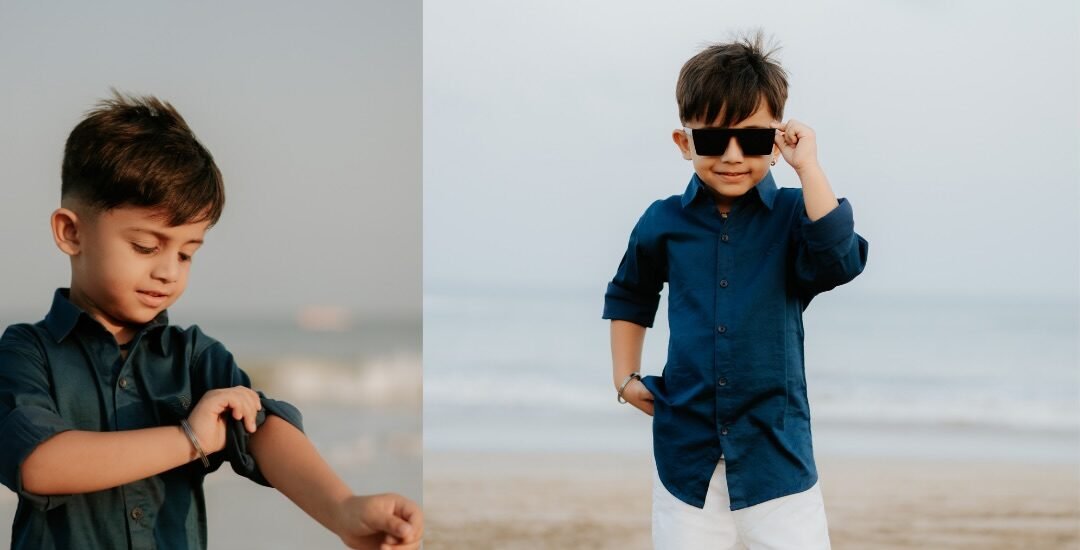
A child does not need to hold a perfect smile for a portrait to be worth keeping. The way they concentrate on a small discovery, lean towards a parent or pause between games can be just as recognisable. Children’s portrait photography works best when the session makes room for those ordinary expressions.
For a portrait session in Diu, begin with the child’s usual routine and comfort. Then choose a suitable setting, a few simple activities and a short list of photographs that matter to the family. The camera should fit the child, rather than expecting the child to perform a long sequence of poses.
This guide focuses on planning and photography. It does not offer medical or developmental advice, and it does not describe fixed package timings or guaranteed results.
Choose a purpose for the portrait session
Think about what you want to remember at this stage: a particular expression, the child’s relationship with a sibling, a favourite activity or a clear photograph for the family collection. You do not need a birthday or formal occasion to make the session meaningful.
Share two or three priorities with the photographer. A clear individual portrait, a parent interaction and a wider activity photograph may provide enough variety. Add other ideas only if they fit the child’s interest and the agreed time.
Keep reference images flexible
Use examples to explain the style you like, such as natural expressions or a simple background. Avoid expecting an exact recreation of another child’s pose. Different children respond differently to the same setting and instruction.
Describe your child without labelling them
Tell the photographer what usually helps: time to observe, a parent nearby or a familiar activity. Practical information is more useful than predicting that a child will be “difficult” or must become outgoing for the session.
Plan around the family’s real routine
Parents know when their child is usually comfortable, rested and ready to engage. Share that information before choosing a time solely for a preferred background. A beautiful setting is less useful if the session conflicts with the child’s normal needs.
Leave enough time for arrival and settling in. Avoid adding several rushed errands immediately before the shoot where possible. Tell the photographer about travel or other commitments that may affect the day.
Ask how breaks and a change of pace fit within the booking. Confirm what happens if the session needs to be shortened or rearranged. Those terms should be clear before anyone relies on a particular plan.
Choose a location with parents in mind too
A practical location needs more than an attractive view. Ask about access, available space, privacy and where belongings can be kept. Consider how the family will reach the area and how quickly you can return to a comfortable waiting place.
For an outdoor session, check the actual conditions with the photographer. Keep children away from unsuitable surfaces, traffic, water edges and other hazards. The camera team does not replace parental supervision.
Have an agreed alternative
A sheltered or indoor option can help when the original location is unsuitable. Confirm permission and access beforehand. An alternative should be real and usable, not just the name of a nearby property.
Reduce unnecessary location changes
One suitable place with several simple compositions can be enough. Repeated packing, walking and transport may use the child’s interest before the photographs begin. Move only when the next setting adds something useful to the brief.
Prepare clothes that allow ordinary movement
Try the outfit before the session. Let the child sit, walk and play in it so you can notice uncomfortable fastenings or restrictive fabric. Familiar, well-fitting clothes usually make the session easier to manage.
Bring a practical spare where needed. Keep accessories optional and easy to remove. If a hat or pair of glasses is unfamiliar, do not make wearing it the condition for a successful photograph.
For family pictures, coordinate without requiring identical outfits. Choose clothing the adults can move in too. A parent who can sit or walk comfortably has more options for natural interactions.
Bring a small, useful session bag
Pack what the family normally needs for an outing, plus the agreed portrait items. Keep the bag manageable and accessible. A large collection of props can create more decisions without helping the child feel comfortable.
| Item or decision | Purpose | What to check |
|---|---|---|
| Comfortable outfit | Easy sitting and movement | Fit and familiar footwear |
| Practical spare | A simple change if needed | All required pieces packed together |
| Familiar small item | A natural point of interest | Suitable for the child and setting |
| Normal outing essentials | Support the family’s routine | Kept within easy reach |
| Parent’s brief | Share priorities and comfort needs | Short and realistic |
A favourite item can appear in the photographs if it belongs to this stage of life. It does not need to match a decorative theme. Ask before adding anything supplied by another person.
Use activities instead of repeated smile instructions
Simple, familiar actions give the photographer something to observe. A child might look at a book, walk with a parent, arrange a suitable toy or talk about something they enjoy. Choose activities the family already knows are appropriate.
Allow the photographer to guide the pace while a parent remains available. Several adults calling instructions at once can make it unclear whom the child should follow. Agree on one voice when a direction is needed.
Include quiet expressions
A thoughtful face, a sideways glance or concentration can be part of a complete portrait set. You may still want a cheerful direct-to-camera image, but it should not be the only expression considered worth keeping.
Pause when the activity stops helping
If the child loses interest or becomes uncomfortable, change pace or take a break. Repeating the same request more loudly is unlikely to improve the atmosphere. Discuss a shorter priority list rather than forcing every planned photograph.
Let parents be part of the story
A parent standing nearby can help the child settle, and a shared photograph may become one of the most valued images. Tell the photographer if you want that option so the framing and clothing can be planned.
Natural interactions can be simple: walking together, sitting beside each other or listening to the child explain something. There is no requirement for elaborate lifting, balancing or unfamiliar physical actions.
If siblings are included, give them time for individual portraits as well as a shared frame. Avoid making one child responsible for another child’s expression. The photographer can adapt the composition to how they interact comfortably.
Set sensible expectations for the finished photographs
Ask about the selection process, number of edited images and delivery timeline. Confirm whether the agreed session includes family combinations or only the child’s portraits. A short booking cannot automatically cover an unlimited list of groups.
Discuss retouching in plain language. Keep the child recognisable and ask before requesting substantial changes to appearance. Clothing distractions and temporary marks are different from changing facial features or body shape.
Choose a mix of clear portraits and photographs that show personality. A technically tidy frame may not be the one that feels most familiar to you. Explain that preference when selecting images for prints.
Agree on public sharing separately
Tell the photographer your preferences for portfolio and social media use before the session. You can be comfortable with family portraits while preferring that the child’s images remain private. Record the arrangement clearly.
When sharing your own highlights, consider what names, locations and other details you want public. Give relatives a clear explanation of any sharing preferences. The private family gallery guide discusses access and downloading questions that can also help with portrait collections.
Keep original downloads organised and create separate copies for social posts. If you want an album or wall print, discuss suitable files and crops before ordering. The family photo wall planning guide can help you think about how the pictures will be used.
Frequently asked questions
Does my child need to know how to pose?
No. Share the child’s comfort needs and let the photographer suggest simple, appropriate actions. A session can include natural expressions and parent interactions alongside a few clear portraits.
What if the child does not settle?
Pause and discuss the options with the photographer. Follow the rescheduling or shortened-session terms you agreed before booking. No particular expression or pose should be guaranteed.
How do we enquire about children’s portraits in Diu?
Tell Memories by TK Solanki the child’s age, the people involved, preferred setting and any practical needs. Share a few priorities and ask for a realistic session plan that keeps a parent nearby.