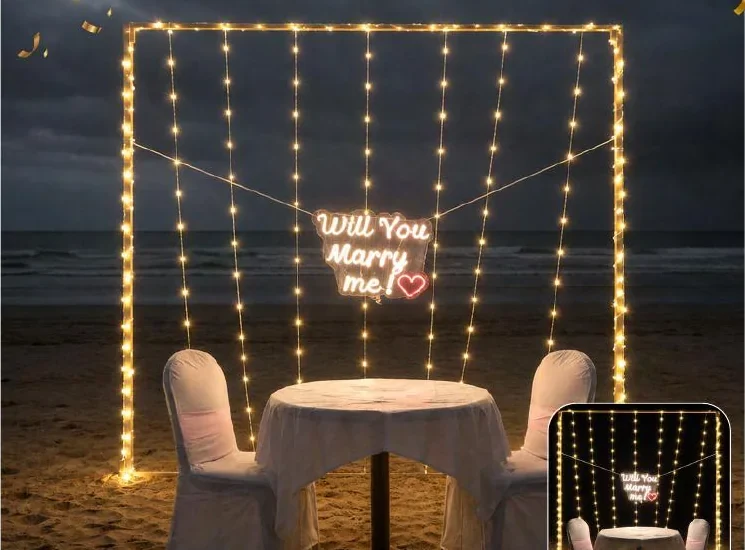
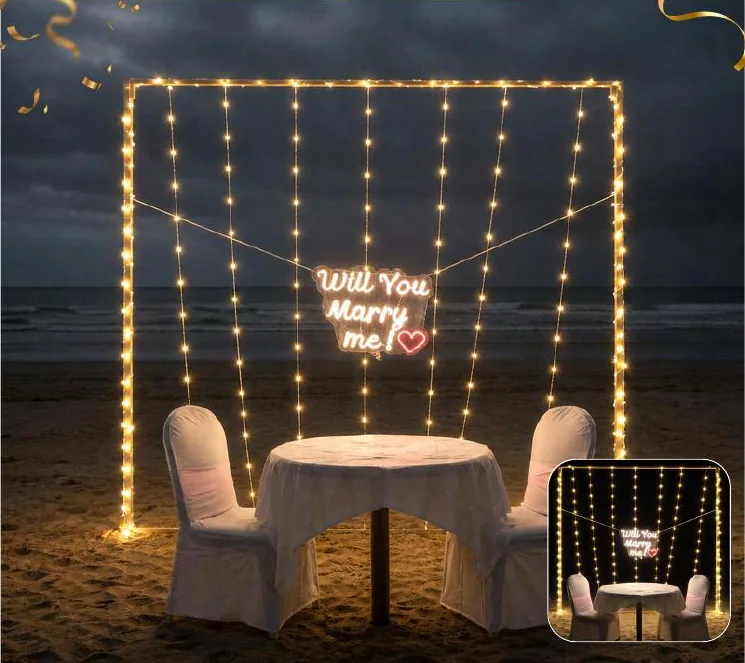
If you are planning a proposal in Diu, an indoor alternative can make the day feel less dependent on the weather. The alternative should still suit your partner and the moment you want to create. A different setting does not need to become a rushed compromise with the same decoration squeezed into an unsuitable corner.
Memories by TK Solanki provides proposal celebration planning in Diu and proposal setups in Diu. Share your original idea and any concerns about an outdoor setting when you enquire. A planner can discuss what is practical for the chosen venue, with arrangements and availability confirmed before the day.
Choose the feeling before choosing the room
Think about what your partner would enjoy. A quiet room with a personal message may suit someone who dislikes attention. A dinner setting may suit a couple who want the proposal to lead into an evening together. A larger reveal with family afterwards has different space and coordination needs.
Describe that preference to the planner in ordinary language. You do not need a finished design. It is enough to explain whether you want the moment to feel private, celebratory or connected to a shared memory. This helps the indoor option develop around the couple instead of around whichever decoration happens to be available.
Consider whether the partner would be comfortable with a visible photographer, surprise guests or a staged entrance. The proposal should leave them room to respond naturally. A plan that depends on a particular public reaction can create pressure, especially when the surprise has already made the occasion emotionally demanding.
Discuss the venue’s arrangements early
Ask about the space you may use and how private it will be. A hotel room, private dining space and shared restaurant area are not equivalent. Check what is included, who may enter and when the setup team can work. The property must confirm its own requirements.
Share the decoration idea before booking anything that depends on the room. Furniture movement, fixtures, lighting and cleanup can affect what the venue permits. A design reference should be treated as a starting point for discussion, not a promise that every element can be reproduced in every setting.
Confirm how you will reach the space without giving away the surprise. The plan may involve a dinner invitation or another honest arrangement that fits your visit. Avoid a complicated cover story that asks staff or friends to improvise. A simple, believable route is easier to manage and more comfortable for everyone involved.
Make the indoor plan complete enough to use
If the indoor arrangement is a backup, decide when you will choose between the two settings. Give the planner a clear decision point and identify who makes the call. Waiting until everyone has arrived can leave little time to move materials or inform the people involved.
Discuss which elements can transfer and which cannot. A walkway, backdrop or table arrangement may have different requirements indoors. The alternative design should be agreed on its own terms, including its layout, setup time and price implications. Do not assume a location change leaves the scope unchanged.
Keep the contact process discreet but practical. If your partner is beside you, you may not be able to answer a long planning call. Agree a suitable way to receive a short update and confirm the decision. The coordinator needs a dependable response without creating a stream of visible messages during the surprise.
Review the layout from the entrance
Imagine the first view your partner will have. Decide where the main decoration, message or table sits in relation to the door. The room should reveal the idea clearly without forcing the couple to step around equipment or through a narrow route.
Leave a comfortable place for the proposal itself. Decorations should frame the moment without filling every available surface. There should be room to stand, move and sit afterwards. The photographer also needs a suitable position that does not turn the room into an obstacle course.
Keep personal details readable and intentional. A short message, a meaningful photograph or an agreed colour can make the setting feel connected to the couple. More objects do not automatically make it more personal. Choose details that you would be happy to explain to your partner when the surprise is over.
Plan light for people as well as decoration
Discuss the room’s existing light and the mood you want. A dim setting can feel intimate but may need a different photography approach from a bright dining space. The planner and photographer should review this together rather than treating decorative lighting and portrait lighting as unrelated decisions.
If a setup includes candles or other particular effects, confirm the venue’s requirements and appropriate alternatives. Do not assume an outdoor reference can be recreated indoors with the same materials. The approved arrangement should suit the space and be managed by the responsible team.
Check reflections and background details. Mirrors, windows and screens can affect the view from a photographer’s position. A room may look different in a photograph from how it looks while standing at the entrance. A brief review before the couple arrives helps identify distractions that can be moved or framed differently.
Keep the photography plan gentle
Decide whether the photographer is already visible or enters at an agreed moment. Both approaches can work when they suit the setting and the couple. The photographer should know the likely proposal position, the entrance route and any restrictions on movement.
Give the moment time. The person receiving the proposal may laugh, become quiet, ask a question or want to sit down. Leave space for that response before moving into portraits. A timetable should support the experience, not make the couple feel they have missed their cue.
After the proposal, a short portrait session can use the setup and another suitable part of the venue if allowed. Agree the coverage and delivery requirements with Memories by TK Solanki when discussing the proposal celebration service. A surprise plan and a photography brief should describe the same sequence.
Coordinate dinner or the next part of the evening
If dinner follows the proposal, decide whether it takes place in the same space or elsewhere. Coordinate food service so it does not interrupt the main moment. The venue needs the timing and the contact who can confirm when the couple is ready.
If family or friends join afterwards, give them a waiting point and a clear update process. Their arrival should follow the couple’s readiness rather than an inflexible countdown. Someone other than the person proposing should handle the practical message so they can stay present.
Plan the end of the arrangement as well. Confirm the room-use period, cleanup responsibilities and what happens to any keepsakes or personal items. You should know which items you can take away and which belong to the setup. These details are easier to settle before the evening begins.
Indoor setting comparison
| Setting | Useful for | Confirm before choosing |
|---|---|---|
| Private dining space | Proposal followed by dinner | Privacy, service timing and decoration access |
| Hotel room | An intimate reveal | Property approval and setup arrangements |
| Reserved event space | A larger setup or family reveal | Access, furniture and room-use period |
| Covered venue area | A partly outdoor feeling | Actual weather protection and guest access |
Information your planner needs
Tell the planner your date, accommodation or venue preference and whether the indoor setting is the main plan or a backup. Describe your partner’s comfort with surprises, photographs and other guests. Add any personal message or meaningful detail you want to include.
Share the practical constraints too. A limited arrival window, dinner reservation or partner’s preference for a quiet evening can change the design. An accurate brief is more useful than an elaborate reference photograph with no explanation of the day around it.
Proposal coordination table
| Decision | Confirm with | Why it matters |
|---|---|---|
| Room and access | Venue | Establishes what can be arranged |
| Design | Planner and you | Makes the indoor idea intentional |
| Decision point | Planning contact | Gives a backup time to be prepared |
| Photographer position | Photography team | Protects the view of the moment |
| Dinner timing | Venue contact | Prevents an interruption |
| Family arrival | Named helper | Keeps the reveal comfortable |
Frequently asked questions
Can an indoor proposal still feel special in Diu?
Yes. A personal design and a comfortable sequence matter more than a particular backdrop. Choose the room and details around the couple.
Can an outdoor setup simply be moved indoors?
Some elements may transfer, but the layout and venue requirements need review. Agree an indoor design and any scope changes before relying on it.
Should the photographer hide?
That depends on the space and your partner’s comfort. Discuss a practical position and entrance process rather than making concealment the only goal.
Who provides proposal setups in Diu?
Memories by TK Solanki provides proposal celebration planning and proposal setups in Diu. Share your date and preferred experience to discuss the options.
Plan your proposal with Memories by TK Solanki
Send your date, preferred setting, guest involvement and any setup references. Explain whether you need an indoor main plan or a backup for an outdoor idea. Memories by TK Solanki can discuss a proposal setup in Diu with the venue and photography requirements included in the brief.
Enquire about your proposal or message the team on WhatsApp. The private proposal guide can help you decide how much attention feels right for your partner.