
A wedding photography timeline in Diu should explain where the camera team needs to be and when the couple is available. It does not need to script every expression. Its purpose is to protect important coverage from being squeezed between preparations, travel and ceremonies that already have their own demands.
Memories by TK Solanki provides wedding photography in Diu. Share the real programme when discussing coverage, including any functions in different places. This guide explains how to build a useful photography timeline around the wedding rather than adding a portrait session to whatever time happens to remain.
Begin with the fixed parts of the programme
Identify ceremonies, venue-use periods and other timings that cannot easily move. These form the structure of the day. The photographer can then discuss how preparation coverage, details and portraits fit around them.
Ask the family or organising contact to explain the ritual sequence. Different families may have different traditions or additional moments. The team needs the version expected at your wedding, not a general assumption about how the ceremony normally proceeds.
Mark which times are firm and which are estimates. This helps the photographer plan realistically and allows the coordinator to explain a change. A schedule with every item presented as exact can become confusing when preparations or guests take longer than expected.
Map the locations and movement
List where each part happens. The preparation rooms, ceremony space and portrait location may be within one venue or at separate sites. The team needs to know the real distance and access arrangements between them.
Include movement time for the couple as well as the camera team. Wedding clothes, family greetings and venue routes can make a short transfer take longer than an ordinary walk. A portrait period should not begin at the exact moment the couple is still expected elsewhere.
For an outdoor or separate location in Diu, confirm access and current conditions before treating it as part of the timeline. The photography plan should include an appropriate alternative if the chosen area cannot be used. A location name alone does not guarantee a useful session on the date.
Schedule preparation coverage with the people involved
Tell the team when preparation is expected to begin and finish. Getting-ready coverage may include atmosphere, personal details and a few portraits. The photographer should know which parts matter to the couple and who is comfortable being present in the photographs.
Coordinate with the preparation team about access and timing. The camera should not interfere with work that needs to be completed. A clear brief can identify useful moments while allowing hair, makeup, clothing and other preparations to continue.
If both partners are getting ready in different places, discuss coverage roles. One photographer cannot be in two rooms at the same time. The booking should reflect whether the programme requires separate coverage or a prioritised sequence between locations.
Reserve portraits deliberately
Choose a portrait period that has a realistic beginning and end. The couple should know when they are expected and which location will be used. The coordinator should understand that this period is part of the programme rather than an optional gap.
Agree a short list of priorities. If the session becomes shorter, the photographer can protect the couple’s most important images before adding variations. This is more useful than a long reference collection with no indication of which photographs matter most.
If photographs and film share the period, discuss how it will be used. Filmed movement or sound may need a different approach from a still portrait. The couple should not have to negotiate between teams while another event is waiting to begin.
Give family groups a separate place
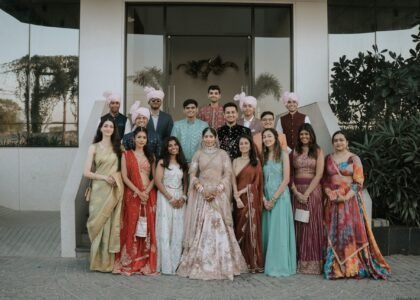
Family group photographs involve gathering people as well as arranging them. Reserve time for both. A family helper who knows the list can bring guests to the agreed location while the photographer stays ready to work.
Put important groups first and consider guests who need a shorter waiting period. The list should be manageable within the schedule. Additional requests can be reviewed after essential photographs rather than interrupting every group already being arranged.
Use the wedding family group-photo guide to prepare the list. Share the final version with the photography team and helper before the day so everyone understands the same priorities.
Brief the team on entrances and short moments
An entrance, ring exchange or particular blessing may happen quickly. Tell the photographer where it begins and what the couple or family expects. A useful position often depends on knowing the moment before it starts.
Name the coordinator who can provide a short readiness update. The couple should not need to interrupt their own entrance to locate the photographer. One reliable contact can keep the team informed without creating several competing instructions.
If a moment changes location or timing, update the relevant teams together. Photography, film, production and the organiser should receive the same version. A change shared with only one person may leave another team waiting in the original place.
Build flexibility around the priorities
A timeline should allow practical adjustment. Preparations may take longer, guests may arrive late or a ritual may need more time. The photographer and coordinator should know which images can move and which moments need immediate coverage.
Choose a simple process for changes. The coordinator gives the new information, the photographer explains the coverage effect, and the authorised contact makes any necessary decision. The bride or groom should not become the messenger between every supplier.
Avoid promising that a delay has no effect. A shorter portrait period or overlapping event can change what is possible. Clear priorities let the team use the remaining time well, while honest communication helps the couple understand the revised plan.
Confirm where coverage ends
Decide which final ritual, gathering or departure is included. A wedding programme can continue beyond the booked coverage period, so the endpoint should be described clearly. Do not assume the team will remain indefinitely because the last item has moved.
Discuss how an extension would be approved if it becomes necessary. The responsible contact and booking terms should be known before the day. This keeps a practical change from becoming an uncertain conversation while the couple is busy with guests.
Memories by TK Solanki can discuss event photography in Diu when a wider celebration or separate function needs coverage. Explain the full programme so the team can describe an appropriate scope rather than adding unplanned work to a wedding brief.
Photography timeline structure
| Programme block | Photography need | Information to share |
|---|---|---|
| Preparations | Details, atmosphere and people | Rooms and expected readiness |
| Couple portraits | Deliberate images together | Priority list and usable location |
| Family groups | Important relationships | Final list and gathering helper |
| Ceremony | Rituals and reactions | Sequence and movement restrictions |
| Speeches or celebration | Key people and activity | Running order and sound needs if filming |
| Final moment | Agreed endpoint | Coverage period and extension contact |
Review the timeline as a working document
Ask each contact to read the part that depends on them. The preparation coordinator checks readiness, the family helper checks group gathering and the venue contact checks access. This can reveal an assumption that the couple would not notice from the overall schedule. The photographer then reviews the combined plan for coverage and movement. Keeping these checks connected avoids a timetable in which every individual section looks reasonable but the transitions cannot work. A shared final review is particularly useful when different family members have arranged different parts of the wedding and no single supplier has seen the complete programme.
Read the schedule with the coordinator and photography team. Check each change of place, the time needed to gather people and any overlapping events. The most useful review is one that finds practical conflicts before the wedding rather than simply approving a neat document.
Send the final version through one agreed route. Mark it clearly so older drafts are not used. If there is a last revision, identify what changed and who needs to know. A short, current schedule is more useful than several detailed versions circulating at once.
Final timeline responsibility table
| Task | Owner | Confirmation |
|---|---|---|
| Ceremony timings | Family or organiser | Actual expected sequence |
| Preparation updates | Named contact | Readiness and room access |
| Portrait priorities | Couple | Essential images and preferences |
| Group gathering | Family helper | Names and meeting point |
| Day-of changes | Coordinator | One shared update process |
| Coverage handover | Couple’s contact | Delivery and agreed endpoint |
Frequently asked questions
Does a photography timeline make the wedding too staged?
It should protect coverage and practical movement, not direct every reaction. The team can still observe natural moments within a clear programme.
Should portraits happen before or after the ceremony?
Discuss the programme, readiness and setting with the photographer. The useful choice depends on the actual wedding rather than a universal rule.
What happens if the schedule runs late?
The coordinator should update the team and use the agreed priorities. Some images may move or need a shorter approach, while essential moments remain the focus.
Who can plan wedding photography coverage in Diu?
Memories by TK Solanki provides wedding photography in Diu. Share the programme and locations to discuss the coverage timeline.
Plan your coverage with Memories by TK Solanki
Send your wedding dates, venues, ritual sequence and preparation arrangements. Include family groups, portrait priorities and any film requirement. Memories by TK Solanki can discuss wedding photography in Diu around a timetable the couple and family can actually use.
Send your wedding programme or share the details on WhatsApp. The wedding film planning guide explains why spoken moments also need preparation.