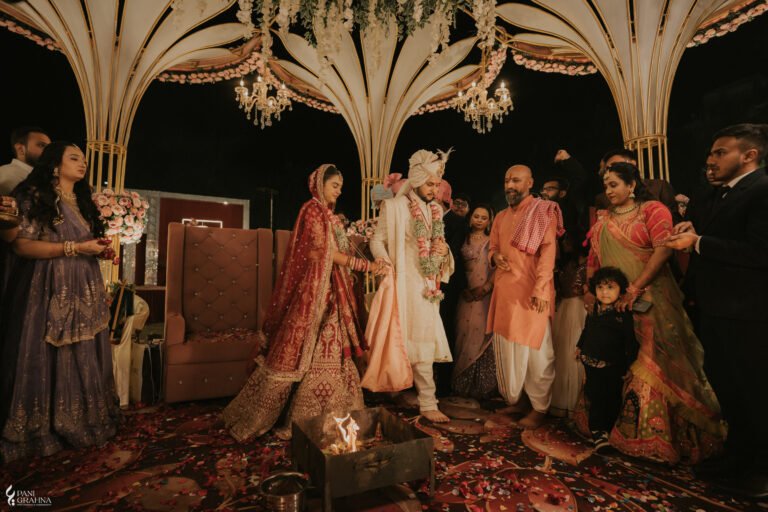
When a wedding in Una involves two family homes and a separate ceremony venue, the photography plan needs to follow more than one address. The bride’s preparation, the groom’s rituals and the arrival at the venue may overlap. A neat invitation timetable does not automatically make those moments possible for one camera team.
Memories by TK Solanki provides wedding photography and films. Couples in Una can enquire with their dates and complete location list to confirm availability, travel and an appropriate team. This guide focuses on coordinating coverage across both families while keeping the wedding day comfortable for everyone involved.
Draw a map of the wedding day
Start with a simple list of places: the bride’s preparation room, the groom’s home, the ceremony venue and the reception location. Beside each, write the function, working time and a contact person. Share exact map pins rather than relying only on local landmarks that a visiting team may not recognise.
Then mark which events happen at the same time. This is the point at which staffing decisions become clear. If both families have important rituals at nine in the morning, one photographer moving between locations will miss something. Decide whether you need separate coverage or whether the family is comfortable prioritising one location.
Do not use an untested travel estimate as the whole plan. Check the practical route, entrance and unloading arrangements close to the date. A ceremony may be nearby on a map but still require time to park and bring equipment inside. Build that movement into the schedule instead of treating travel as empty time.
Explain what each family wants recorded
Speak to both sides separately before merging their requests. One family may value formal group photographs; the other may prefer natural interactions and minimal direction. Both can be included, but the team should understand the difference rather than discover it in the middle of the event.
Ask each side for a short list of essential people and rituals. Include relatives who will leave early or who have travelled specifically for the wedding. These details are easy for family members to know and difficult for a photographer to guess. A list with names is more useful than a request to photograph everybody important.
The wedding photography service is the main place to discuss a combined plan. For larger family combinations, the family group photography service helps frame the portrait requirements. Keep those requests practical: essential groups first, optional combinations when there is time.
Give every team member a defined job
If separate preparation coverage is booked, identify who goes where. State the arrival time, the first contact and the point at which the teams meet at the ceremony venue. The couple should not have to work this out through phone calls while getting dressed.
Video roles need the same clarity. A second photographer is not automatically a second filmmaker. If you want preparation footage from both homes, ask whether that is included and how the video staffing works. Confirm what will be recorded and what will appear in the finished film.
Keep one person responsible for updates from each family. That person can report a delay, a venue change or a revised procession start. The photography team then receives information from a reliable source instead of several well-meaning guests giving different instructions.
A two-location coverage worksheet
| Moment | Location to record | Decision for the family |
|---|---|---|
| Bride getting ready | Exact room and building entrance | Set the readiness time and privacy boundary |
| Groom’s rituals | Home or booked preparation venue | Confirm whether a separate photographer is needed |
| Departure and arrival | Start point and ceremony entrance | Identify the coordinator who gives the cue |
| Main ceremony | Mandap and permitted camera positions | Share the ritual sequence with both teams |
| Family portraits | One accessible area at the venue | Gather essential groups before people leave |
The worksheet is a brief, not a demand to turn every moment into a photograph. Leave enough room for the family to be present in the celebration. If an early ritual is naturally small and private, agree how much coverage feels appropriate instead of copying a larger wedding’s shot list.
Keep preparation coverage calm
Place clothing and accessories together before the photographer arrives. Clear one workable corner of the room and leave enough space for the people helping the couple dress. The aim is to remove avoidable clutter, not to erase the character of a real family home.
Tell the team when makeup and dressing should be complete. If that time slips, communicate it promptly. A photographer may begin with details or family interactions, but cannot make a finished bridal portrait while the outfit is still being assembled. Honest timing protects the rest of the day.
Avoid filling the room with everyone who wants to watch. The couple, makeup artist, a few helpers and camera team already need space. Let other relatives join for planned pictures once preparation is complete. This often produces a calmer experience and more useful photographs than a crowded room with nobody able to move.
Manage arrivals without staging the whole entrance
Tell the team what the arrival will involve and where family members will stand. If there is a procession or a formal welcome, the photographer needs a clear route and a moment to take position before it begins. One coordinator giving a cue is enough; the couple should not need to wait for several separate approvals.
Ask guests with phones to avoid standing directly in front of the main cameras during important actions. There is usually room for personal photographs, but a phone held between the couple and the photographer can obscure a moment that will not happen again.
If the arrival runs late, update the ceremony team rather than adding a rushed portrait session on the approach. The important action comes first. Portraits can often move to a quieter point later, provided the new slot is communicated to both families.
Create a family list that can be completed
Start with the couple and parents, then add grandparents, siblings and essential wider groups. Keep names beside each combination and mark who needs a seat or early release. Grouping relatives by availability is more practical than following a rigid order copied from another wedding.
Make a separate list for each family, then identify shared combinations. That prevents repeated photographs with only one person added each time. A photographer can still make smaller portraits afterwards, but the essential album record should not require the couple to stand on the stage for an hour.
Choose a gathering point away from dinner queues and the ceremony entrance. Family helpers can assemble the next group while the current one is photographed. Guests should know when their part is complete so they can return to the event without being called back repeatedly.
Before the wedding week, circulate the final plan to the people who actually need it: family coordinators, the venue contact and the photo and video leads. Include a version date so an older screenshot does not become the working schedule. If a timing changes, send the complete revised section rather than a series of isolated messages. People should be able to see where they need to be and why. Keep the couple informed of meaningful decisions without requiring them to manage every small transfer or equipment question.
Plan what happens if the schedule changes
A delay at one home can affect both teams. Decide which events are fixed and which can move. The ceremony time confirmed with the officiant may be a fixed point, while solo portraits may be flexible. A priority order lets the team respond sensibly instead of trying to preserve an impossible original timetable.
Keep the venue informed when arrivals change. If the photography team needs to photograph the empty setup, it must know when decoration will actually be ready. Asking for those pictures after guests have filled the room creates a different result and should not become an argument on the day.
| If this changes | Tell this person | Protect this first |
|---|---|---|
| Makeup finishes late | Preparation photographer and family coordinator | Departure and ceremony commitments |
| Procession timing moves | Venue contact and arrival team | Clear entrance coverage |
| A relative leaves early | Family portrait helper | Their essential group photograph |
| Reception extends | Main coordinator and photography lead | Agreed finish time and extension decision |
| Venue changes | Entire photo and video team | Correct address, access and coverage scope |
Ask about extension charges before the wedding. A flexible team still needs clear working terms. If the family chooses additional coverage, record that decision with the person authorised to approve it.
Questions Una couples often ask
Can one photographer cover both family homes?
Sometimes, if the important events do not overlap and travel is practical. Send the actual timetable so the provider can explain the tradeoffs instead of promising complete coverage from incomplete information.
Should both families send instructions directly?
They should contribute to the brief, but one coordinator from each side is easier during the event. Merge important requests before the wedding to avoid conflicting directions.
Can we have photography and films at both locations?
You can request that scope from Memories by TK Solanki. Confirm separate staffing, the events included and the edited deliverables. It should be explicit in the quotation.
What should we send with our enquiry?
Send the Una wedding date, all venue pins, function times, guest estimate and essential coverage priorities. Ask for team availability and travel arrangements to be confirmed before booking.
Organise both families in one clear brief
Memories by TK Solanki provides the wedding photography and film services you can enquire about for your celebration. Share the two family schedules together so the proposed team reflects the real day. Send your details through the contact page or WhatsApp the team, then review the wedding photography coverage with your coordinator before confirming the booking.
Area reference: Gir Somnath district administration.