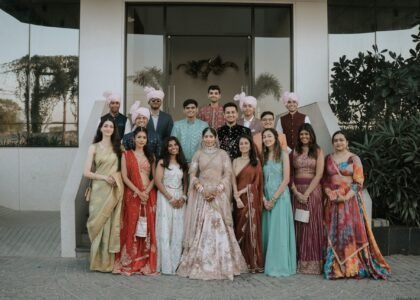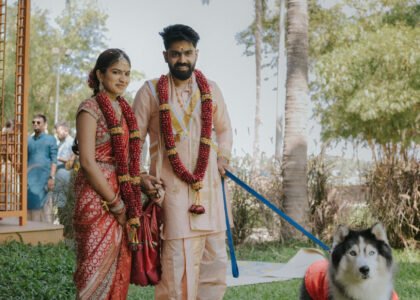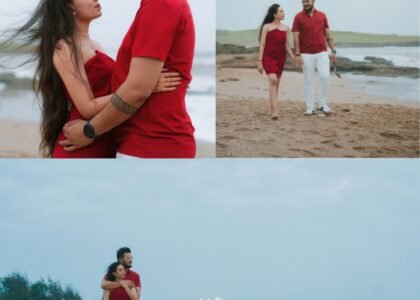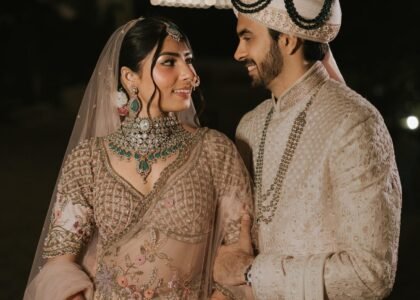
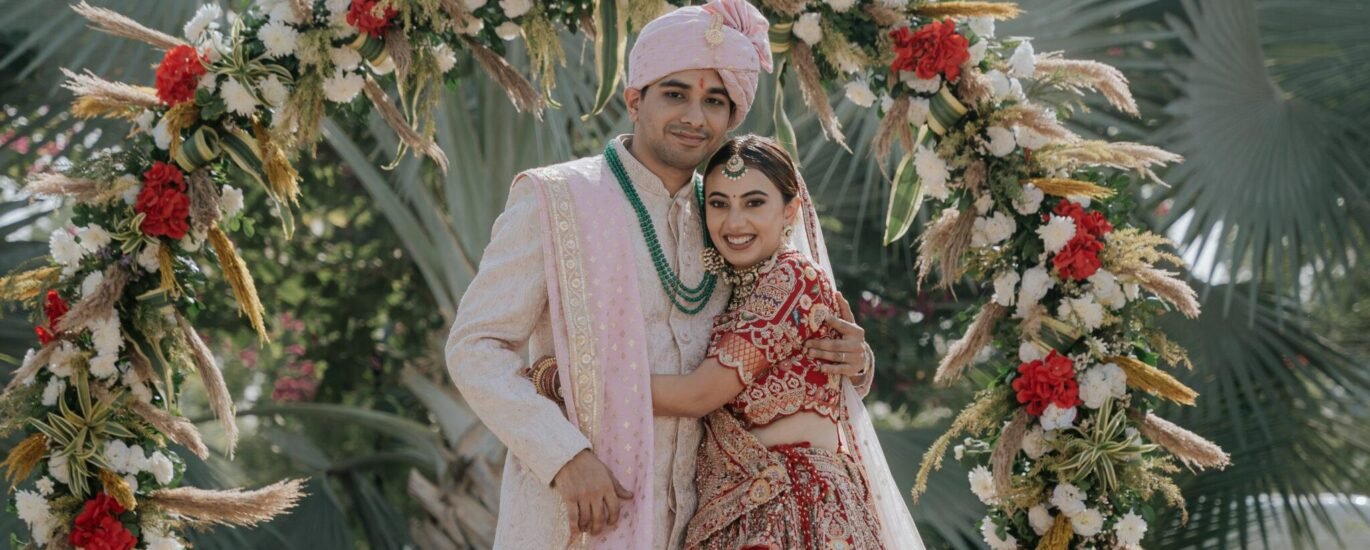
The wedding gallery arrives, you open it together, and suddenly choosing favourites becomes a surprisingly large job. Several photographs show the same moment beautifully. A parent wants more relatives included. You want the album to feel personal without becoming crowded. To choose wedding album photos, begin with the story you want the book to tell.
An album is a selection, not a copy of the entire gallery. Its pages can give important images room while keeping the day understandable. The aim is not to prove that every photograph was included; it is to make a book you will enjoy opening.
This guide is for couples and families planning an album after a wedding in Diu or elsewhere. Page counts, image limits, materials and revisions depend on the album service you book.
Confirm the album scope before making your shortlist
Ask what has actually been agreed: album size, number of spreads or pages, approximate image capacity, cover options and revision process. Designers and studios may use “page” and “spread” differently, so ask them to show an example.
Find out whether extra images or additional pages change the quote. It is easier to make sensible choices when you know the available space. Do not spend days selecting a very large set based on an assumed package.
Ask which gallery to select from
Use the photographer’s final delivered selection or the specific proof gallery they identify. Preview screenshots, social media crops and phone downloads may not be the files intended for print. Keep the original filenames when submitting selections.
Choose one person to send the final list
Both partners and family members can contribute, but one consolidated response reduces confusion. Agree on who will collect feedback, resolve duplicates and send the approved list. Avoid several relatives sending different versions directly to the designer.
Make the first pass about meaning
Look through the gallery once without trying to design the book. Mark photographs that make you pause: a meaningful expression, an important ritual, a person you are glad was there or a portrait that feels like you.
Do not compare every near-duplicate immediately. The first pass identifies what matters. A second pass can choose the strongest version from each group. Separating those decisions makes the task less tiring.
Work in manageable sessions. After a while, similar photographs can become hard to distinguish. Take a break and return with a clearer idea of what the album still needs.
Organise the shortlist into parts of the day
Group your choices by the real sequence: preparation, arrivals, ceremony, portraits and celebration, or whatever structure fits your wedding. You do not need to give every part equal space. Give more room to the moments that matter most to you.
| Image type | What it adds | Selection question |
|---|---|---|
| Scene-setting photograph | Place and atmosphere | Does the reader understand where we are? |
| Clear ritual image | The central action | Can we see what happened? |
| Family reaction | Relationship and emotion | Does this add something beyond the action? |
| Couple portrait | A quieter visual pause | Does this feel like us? |
| Meaningful detail | Personal context | Will this detail still matter later? |
Use the table to find gaps rather than to enforce a formula. A small ceremony may need a very different album from a multi-event wedding. There is no compulsory percentage for portraits, family groups or details.
Choose between similar photographs
When several images show the same moment, compare expression, eye direction, visible faces and the way the frame explains the event. Choose the version that feels strongest at the size it may be printed.
A small change in a hand or smile can matter to you even if nobody else notices. Explain that preference when keeping two similar images. Otherwise, near-duplicates may use space that could show another relationship or part of the day.
Keep a sequence when it tells a story
Two or three related frames can be useful when something develops: a glance, a reaction and laughter, for example. The sequence earns its space when the photographs are meaningfully different.
Check whether each image adds information
Ask what disappears if you remove one photograph. If the answer is “nothing except a slightly different angle”, consider keeping it in the digital gallery instead. The album can be selective without making the unprinted photograph less valuable.
Review family coverage thoughtfully
Make a separate list of the people and relationships you want represented. Check it against the shortlist. This is more reliable than expecting yourself to remember every relative while comparing portraits.
Representation does not always require a formal group. A natural interaction may be the photograph you value most. If a formal family picture matters to a parent, make room for that preference before the design reaches its final approval.
Do not ask the designer to identify relatives from appearance. Use filenames and explain the relationships where necessary. For future readers, check any names or captions with someone who knows the family.
Think about image size and page rhythm
Some photographs need space to be understood. A large group reduced to a tiny box may technically include everyone while making faces difficult to see. A quiet portrait can also lose its effect when surrounded by too many competing images.
Allow a mix of fuller pages and simpler spreads. The designer can suggest a rhythm once the priorities are clear. You do not need to fill every empty area with another photograph.
Share examples of layouts you like, but explain what appeals to you. It may be large images, restrained captions or a straightforward chronological sequence. That is more useful than asking for an exact copy of someone else’s album.
Check crops, folds and edges in the proof
A photograph’s original shape may not match the space in a layout. Review cropped faces, hands, jewellery and important objects. Ask the designer to show the proposed print area clearly.
Pay attention to the centre of a spread and any binding considerations explained by the album supplier. Avoid assuming that everything visible on a screen will sit in the same position in a finished book. Ask for clarification when an important feature crosses the centre.
Check the cover separately. Confirm spelling, date format and the exact names you want printed. A short cover can still contain an expensive-to-correct typo.
Send feedback that leads to a clear revision
Refer to the proof’s page or spread number and the original image filename. Write the requested action: replace, remove, enlarge or adjust a crop. “This page feels wrong” may describe your reaction, but it does not tell the designer what change you prefer.
Combine comments from both partners into one list. Where preferences conflict, resolve them before sending feedback. Ask how many revision rounds are included and what approval means for the print order.
Keep a copy of the version you approve. If you later request further changes, identify that version so everyone is referring to the same layout.
Keep the digital photographs organised too
The album does not replace the full delivered gallery. Save the final files using the photographer’s download method and keep a separate backup. Preserve the original filenames so a future reprint request is easy to trace.
Create a small folder for album selections if useful, but do not overwrite the master files with crops or messaging-app versions. Label the approved layout and cover proof clearly. Ask the studio what it retains and for how long rather than assuming indefinite storage.
For a wedding still being planned, the wedding photography timeline can help protect the moments you hope to include later. Album choices become easier when the coverage brief already reflects your priorities.
Frequently asked questions
How many photographs should a wedding album contain?
There is no single correct number. Start with the agreed book size and page count, then ask the designer what allows the images to remain readable. More photographs do not always make a stronger album.
Should we include every formal group?
Discuss the important groups with the family. Some may belong in the album, while others can remain in the digital gallery or a separate print collection. Decide deliberately rather than adding them all by default.
Can we order an album after receiving the gallery?
Ask the photographer about current options, availability of the original files and the design process. For Memories by TK Solanki, confirm album inclusions and any later order directly; this guide does not promise a particular product or price.