
A proposal with family in Diu can create two separate moments: the question between the couple and the celebration with people they love. Deciding how those moments meet is the most useful part of the plan. Family involvement should add warmth without making the person receiving the proposal feel they have an audience waiting for a particular answer.
Memories by TK Solanki provides proposal celebration planning in Diu. Family participation, setup and photography can be discussed around an agreed brief. This guide helps you arrange the reveal so relatives have clear instructions and the couple still has room to experience the moment in their own way.
Decide when family should be present
Think about your partner’s comfort with public attention. You may want relatives there for the question, waiting nearby or joining afterwards. These choices create different experiences. Describe the preference clearly before selecting the venue or making travel arrangements for other people.
If you are unsure how much attention your partner would enjoy, choose a plan that leaves room to respond privately. Family can join after a short pause rather than becoming part of the question itself. The point is to support the relationship, not to turn a personal decision into a performance.
Explain the sequence to the planning contact. They should know which people are involved, what remains a surprise and when guests may enter. A family reveal is easier to coordinate when it is treated as a defined part of the programme rather than an informal instruction to come over when it looks finished.
Choose a venue that supports both moments
The couple’s proposal space and the family’s waiting arrangement should work together. Guests need a comfortable place to wait without accidentally entering the reveal. The venue must confirm what space is available and whether the arrangement offers the level of privacy you expect.
Consider the route family members will take. If relatives include older guests or children, a difficult walk or an uncertain waiting period may be unsuitable. Give the planner these practical details early. A setting that works well for two people may need a different arrangement when a family group is added.
If the proposal is outdoors in Diu, discuss an alternative for unsuitable conditions. The family should know which meeting point to use if the location changes. A backup that covers only the decoration leaves the guest coordination unfinished. Review both parts before the date.
Give relatives simple, specific instructions
Tell family members where to arrive, when to be there and who will contact them. Include any parking or venue-entry detail that has been confirmed. Guests should not need to call the person proposing while the surprise is underway.
Choose one family coordinator. This person can answer practical questions, check arrivals and communicate with the planning contact. Relatives may have useful ideas, but the final hour is not the best time for several people to suggest different entrances or changes to the reveal.
Ask everyone to respect the agreed waiting point. Someone approaching early to get a better photograph can reveal the surprise or interrupt the couple. Explain the reason for the plan kindly and clearly. Guests are more likely to follow instructions when they understand what those instructions protect.
Keep the communication process discreet
Use a short readiness message between the planner and the family coordinator. That message should mean one thing, such as the family may now approach. Avoid several ambiguous signals that depend on someone noticing an expression or estimating how long the proposal has taken.
The person proposing should not need to manage the family group in real time. They can share the necessary information before arriving and let the coordinator handle the rest. If the couple is delayed, one practical update should be enough to adjust the waiting plan.
Keep essential contacts available through the agreed method. A group chat can help with logistics, but it should not become the place where everyone edits the plan. The planner and family coordinator need a clear final instruction and the authority to act on it.
Give the couple time before the reveal
Allow a pause after the question. The couple may want to talk, embrace, sit down or simply take in what has happened. The family reveal should follow their readiness rather than a countdown that begins when the photographer sees the ring.
Brief the planning and photography team to watch the experience respectfully. A proposal does not always unfold in the order a reference video suggests. The team should be ready to keep guests waiting a little longer if that gives the couple a more comfortable moment.
If your partner would prefer to call someone privately before relatives join, leave room for that too. You can plan a meaningful celebration without scripting every reaction. A little flexibility makes the family involvement feel supportive rather than another surprise that the couple must immediately handle.
Plan photographs of people, not just the setup
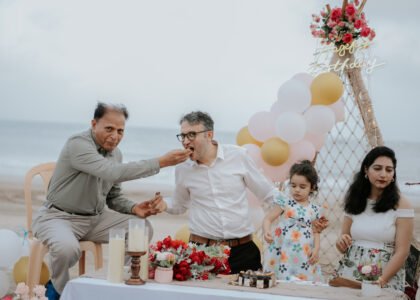
Make a short list of family combinations that matter. The couple with parents, siblings or grandparents may be more meaningful than a long series of similar decoration photographs. The list helps the photographer use the available time without repeatedly asking who should join the next frame.
Memories by TK Solanki provides family and group photography in Diu. If you want family portraits after the reveal, discuss the approximate group size, time available and suitable location. A proposal setup may not have enough room for every group arrangement, so another nearby approved space may be useful.
Let the photographer know about guests who need a shorter session or a seat. Begin with the combinations involving those guests, then move into the couple portraits or other groups. This is a practical way to make the photography comfortable without turning the evening into a formal photo queue.
Coordinate the celebration afterwards
Decide whether family involvement ends with a short gathering or continues into dinner. If dinner is planned, confirm the guest count, reservation and service timing. The venue should know when the group is likely to be ready and who can approve a small timing adjustment.
Keep any speeches or congratulations brief enough to suit the couple. Relatives may want to say something, but there is no need to create an elaborate programme unless that is what the couple would enjoy. A simple shared meal can be a complete celebration.
Tell guests what to bring and what is already arranged. If flowers, gifts or a cake are part of the plan, give them an appropriate handover point. Several people arriving with unexpected items can create a storage problem or distract from the planned setting.
Family involvement comparison
| Approach | Suitable preference | Coordination requirement |
|---|---|---|
| Family present at the question | Partner enjoys a shared moment | Clear positions and comfortable expectations |
| Family joins afterwards | Couple wants a private beginning | Waiting point and readiness message |
| Family at dinner later | Proposal and celebration are separate | Reservation and arrival information |
| Remote family call | Relatives cannot travel | Time and privacy for the conversation |
Keep the brief realistic
Share the actual guest count rather than an optimistic estimate. A few additional relatives can affect the waiting area, dinner and portraits. Confirm when numbers need to be final and who approves additions. This helps the planner explain any change to the agreed scope.
Give the family coordinator the final version of the plan. A short written sequence is enough if it identifies the arrival point, waiting arrangement and reveal instruction. Family members should receive the details they need, while private couple information can remain with the planner and person proposing.
Family reveal responsibility table
| Task | Owner | Detail to settle |
|---|---|---|
| Couple’s arrival | You and planner | Route and likely timing |
| Family arrival | Family coordinator | Guest list and waiting point |
| Readiness update | Planning contact | One clear instruction |
| Group photographs | Photography team | Essential combinations and time |
| Dinner or gathering | Venue and coordinator | Numbers and service arrangements |
| Departure | Guest coordinator | How relatives leave comfortably |
Frequently asked questions
Should parents be present when the question is asked?
Choose the approach that suits your partner and relationship. If privacy matters, parents can join afterwards without losing the meaning of their involvement.
Can family members take their own photographs?
Agree an approach that does not block the photographer or crowd the couple. A short portrait period after the reveal may be a better time for everyone to take pictures.
What if a relative arrives late?
The family coordinator should guide them to the agreed waiting point. Avoid changing the proposal itself solely to accommodate an unplanned arrival.
Who can coordinate a family proposal celebration in Diu?
Memories by TK Solanki provides proposal celebration planning in Diu. Include family involvement and portrait requirements in your enquiry.
Plan the reveal with Memories by TK Solanki
Send the date, preferred setting, family count and whether relatives join before or after the question. Include any dinner, decoration and photography requirements. Memories by TK Solanki can discuss proposal celebration planning in Diu around the couple’s comfort and the family’s practical needs.
Send your family proposal enquiry or share the details on WhatsApp. The private proposal guide helps you decide how to protect the couple’s own moment.